Quick Answer
- Indian residents and NRIs can legally buy freehold property in Dubai with no residency requirement
- The process involves five steps: property selection, MOU signing, developer NOC, DLD registration, and title deed issuance
- Indian buyers fund the purchase through LRS remittance under FEMA at up to USD 250,000 per individual per financial year
- Total transaction costs run approximately 6 to 7% of the purchase price, covering DLD fees, agency, and trustee charges
- Properties above AED 2 million qualify for the UAE 10-year Golden Visa, including family residency rights
Learning how to buy property in Dubai is simpler than most Indian investors expect. The process is transparent, government-regulated, and designed to be completed remotely without visiting Dubai for off-plan purchases.
Dubai’s property market recorded over 270,000 transactions worth AED 917 billion in 2025, its strongest performance on record. Indian nationals consistently rank among the top five buying nationalities. The regulatory framework is clear, buyer protections are strong, and the process from property selection to title deed takes as little as four to six weeks for ready properties.
This guide covers every step of how to buy property in Dubai as an Indian investor — from selecting the right zone and developer to remitting funds under LRS, completing DLD registration, and meeting your Indian compliance obligations under FEMA.
Dubai Property Market in 2026
Before diving into the process of how to buy property in Dubai, understanding the current market context helps Indian investors make sharper decisions about timing, property type, and zone selection.
Market Overview
Dubai’s property market in 2026 continues showing strong performance across both apartments and villas. Buyer demand remains high among end-users and international investors targeting long-term rental returns, according to Knight Frank’s Dubai Residential Market Report. Studios and one to two-bedroom apartments dominate investor demand due to affordability and strong rental yield performance.
| Property Type | Entry Price (AED) | INR Approx. | Avg Gross Yield |
| Studio apartment | 380,000 | 89 lakh | 8–10% |
| 1-bedroom apartment | 600,000 | 1.41 crore | 7–9% |
| 2-bedroom apartment | 900,000 | 2.12 crore | 6–8% |
| 3-bedroom villa | 2,500,000 | 5.88 crore | 5–7% |
| 4-bedroom townhouse | 3,100,000 | 7.29 crore | 5–6.5% |
Understanding current pricing before engaging any developer is the first practical step in learning how to buy property in Dubai. Comparing prices across zones before committing protects you from overpaying in less liquid areas.
Off-Plan vs Ready
Off-plan properties are units purchased before or during construction. They typically carry a 10 to 20% launch price discount against the anticipated ready market value, and come with staggered payment plans that align naturally with LRS annual remittance cycles. Handover typically occurs 12 to 36 months after purchase.
Ready properties are completed and immediately habitable. They generate rental income from the first month and carry no construction risk. However, they require the full purchase price to be remitted within a tighter window, which demands more careful LRS planning for Indian buyers.
For most Indian resident investors working within a single LRS annual limit, off-plan from a DLD-registered developer is the more accessible structure. The cheapest property in Dubai guide on this site covers entry-level off-plan options across every zone in detail.
Freehold Zone Rules
Dubai’s designated freehold zones are areas where non-UAE nationals can purchase and hold full, permanent title as confirmed on the Dubai Land Department’s official portal. There are over 60 designated freehold zones, covering every budget tier from entry-level studios to ultra-luxury villas.
Key freehold zones for Indian buyers include:
- JVC and Dubai South for entry-level studios from AED 380,000
- Business Bay and JLT for mid-market apartments from AED 600,000
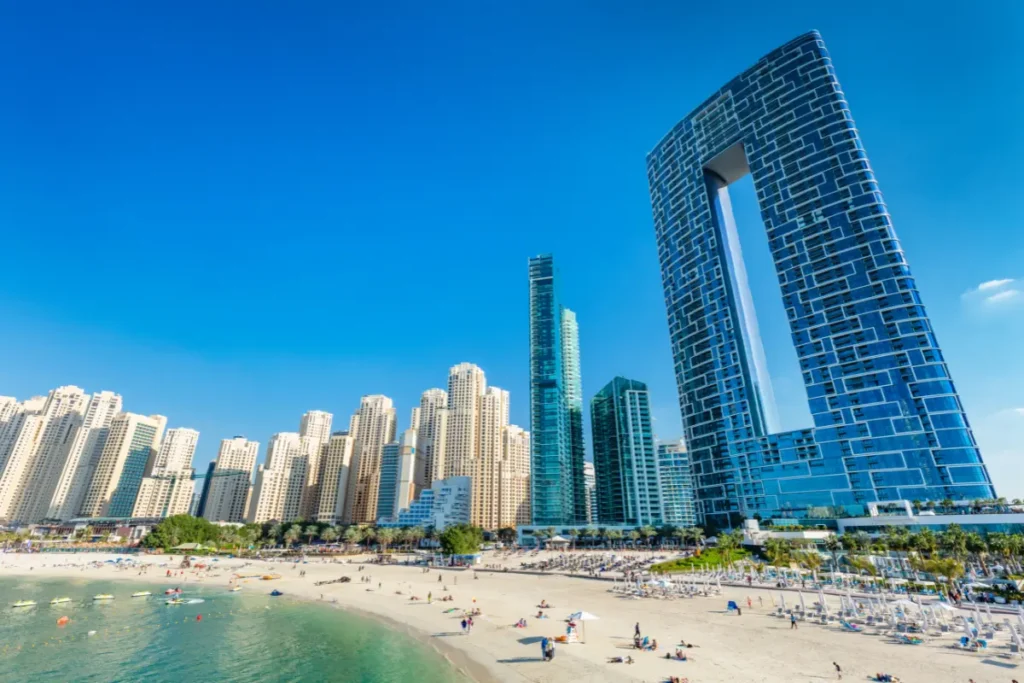
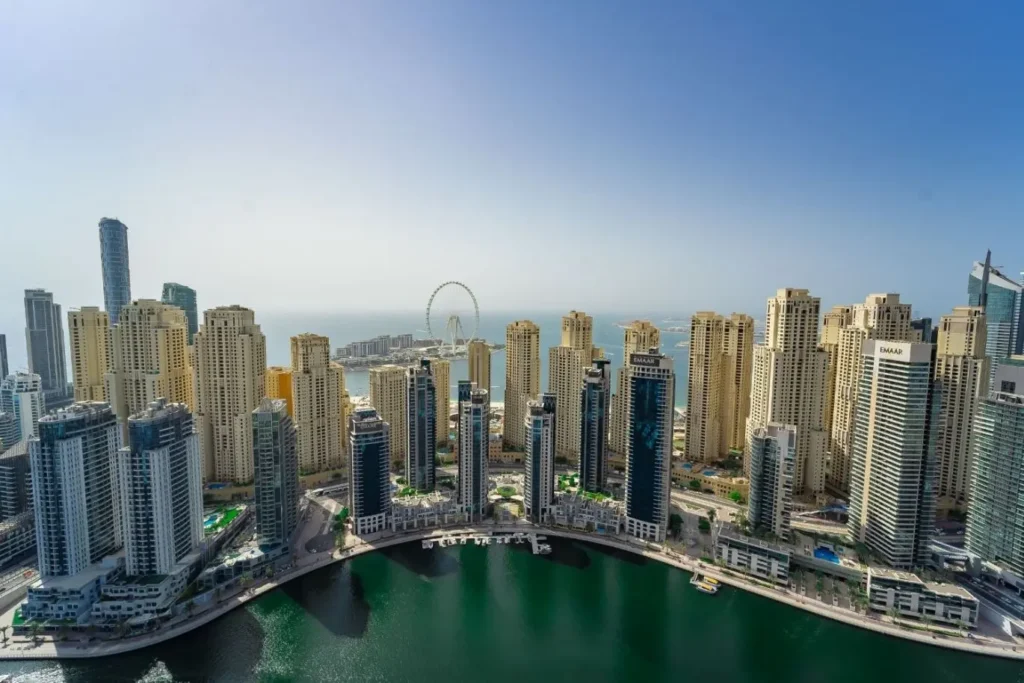
- Dubai Marina and Dubai Hills Estate for premium assets from AED 800,000
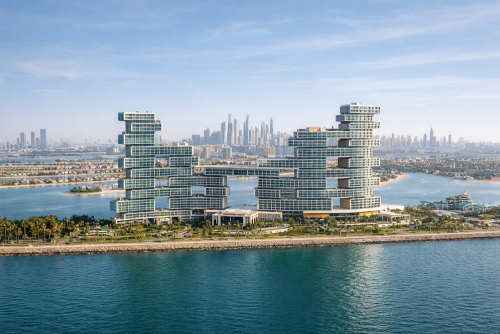
- Downtown Dubai and Palm Jumeirah for luxury assets above AED 1.8 million
Always confirm freehold status for any specific project at dubailand.gov.ae before signing any Sales and Purchase Agreement. This verification takes under five minutes and is non-negotiable for every Indian buyer, regardless of how reputable the developer appears.
Step-by-Step Buying Process
Understanding how to buy property in Dubai step by step is what separates confident investors from those who stall at the research stage. The process is more structured than most overseas markets, which works in the buyer’s favour.
Choose Your Property
The first step in how to buy property in Dubai is selecting between off-plan and ready property, then identifying your specific zone, developer, and unit type. Engage only a RERA-certified broker registered on the DLD’s broker registry if you use an agent. Buying directly from the developer at the Dubai Property Expo eliminates the 2% broker commission.
Selection criteria for Indian investors:
- Confirm the developer’s active DLD registration on the official portal
- Verify the RERA-approved escrow account exists for off-plan projects
- Check the developer’s completed project history — minimum two delivered projects
- Review the payment plan structure against your LRS annual calendar
- Confirm the specific unit sits within a designated freehold zone
The list of property developers in Dubai guide on this site provides a full vetted breakdown of every major developer relevant to Indian buyers in 2026. Take this research into your first developer meeting, so conversations move to specific units immediately rather than introductory discussions.
Sign the MOU
Once you select a property in Dubai, you sign a Memorandum of Understanding (MOU), also known as Form F, which is the preliminary agreement between buyer and seller or buyer and developer.
- Late handover penalty provisions and compensation terms
- Service charge estimates for the building
- Cancellation terms and refund timeline
- Payment milestone schedule aligned to construction progress
For off-plan purchases directly from the developer, the MOU stage is replaced by the Sales and Purchase Agreement (SPA), which is the legally binding contract outlining the full price, payment schedule, handover date, and penalty clauses. Read the SPA carefully before signing. Pay particular attention to:
DLD Registration Steps
DLD registration is what transfers legal title from the developer to the buyer and issues the official Title Deed in your name. For off-plan properties, an interim Oqood registration is completed at the DLD’s electronic system first, with the full Title Deed issued at handover.
| Step | Action | Who Does It | Cost |
| 1 | Oqood registration (off-plan) | Developer via DLD portal | AED 525 |
| 2 | NOC from the developer | Developer | AED 500–5,000 |
| 3 | Attend DLD Trustee Office | Buyer + Seller/Developer | — |
| 4 | Pay the DLD transfer fee | Buyer | 4% of property value |
| 5 | Pay the Trustee Office fee | Buyer | AED 2,000–4,000 |
| 6 | Title Deed issued | DLD | Included in the transfer fee |
The entire DLD registration process for ready properties takes four to six weeks. Off-plan registration via Oqood completes within days of SPA signing, with the full Title Deed issued at handover. The Title Deed is your internationally recognised ownership document and the instrument required for Schedule FA disclosure in your Indian income tax return.

Key Costs and Fees
Many Indian investors research how to buy property in Dubai for months before realising they have underestimated the total acquisition cost. The purchase price is only part of the total commitment. Planning the full cost picture in INR before approaching any developer is essential.
Transaction Cost
The primary transaction costs for buying property in Dubai are well-defined and fixed by the DLD. There are no hidden government fees beyond those listed below.
| Cost Item | Rate | Example: AED 800K Unit | INR Approx. |
| DLD transfer fee | 4% of the purchase price | AED 32,000 | 7.52 lakh |
| Agency commission | 2% (if using a broker) | AED 16,000 | 3.76 lakh |
| Developer NOC fee | AED 500–5,000 | AED 2,500 | 58,750 |
| DLD Trustee Office fee | AED 2,000–4,000 | AED 4,000 | 94,000 |
| LRS bank remittance fee | 0.5–1% per transfer | AED 4,000–8,000 | 94,000–1.88 lakh |
| Total approx. | 6–7% of the price | AED 54,500–62,000 | 12.8–14.6 lakh |
The agency commission of 2% is eliminated entirely when purchasing through the Dubai Property Expo, since you are transacting directly with the developer. This alone saves INR 3.76 lakh on an AED 800,000 purchase. For a full INR-based pricing breakdown across all Dubai zones, read the Dubai property price in Indian rupees 2026 on this site.
Hidden Cost
Beyond the transaction costs above, Indian investors must budget for ongoing annual costs that affect the net yield calculation.
Annual holding costs to factor into your INR projection:
- Annual service charge: AED 10–20 per square foot per year, building-specific
- Property management fee: 5–8% of annual rental income for long-term lets
- DEWA utility deposit: AED 2,000–4,000 for initial connection (usually borne by tenant)
- Ejari registration: AED 220 per tenancy contract annually
There is no annual property tax, no wealth tax, and no rental income tax in Dubai. The property tax in Dubai on this site covers how this zero-tax structure compares to India’s multi-layer property cost structure in detail. Understanding the full annual cost picture before purchase prevents surprises during the first tenancy cycle.
Mortgage Options
Indian investors can access mortgage financing from UAE-based banks, both local and international institutions operating in Dubai. Mortgage terms are typically 10 to 25 years, shorter than standard Indian home loan tenors.
Key mortgage parameters for Indian buyers:
- Non-resident LTV: up to 50–60% loan-to-value
- UAE resident LTV: up to 80% loan-to-value
- Minimum property value: typically AED 500,000 for mortgage eligibility
- Down payment required: minimum 20–25% for non-residents on ready property
- Interest rate: variable, typically 4–6% per annum for non-resident investors
Most Indian investors purchasing their first Dubai asset use personal funds remitted under LRS rather than UAE mortgages, as the LRS structure is simpler and avoids UAE bank eligibility requirements. However, for higher-value assets above AED 1.5 million, a UAE mortgage can extend buying power beyond the single-year LRS limit.
Indian Buyer LRS Rules
How to buy property in Dubai as an Indian investor specifically requires understanding the LRS and FEMA framework before any money moves. This is the area where most Indian buyers encounter friction, and where proper preparation eliminates almost all compliance risk.
FEMA & LRS
FEMA (Foreign Exchange Management Act) permits Indian residents to purchase overseas real estate as a permitted capital account transaction. Under the RBI’s Liberalised Remittance Scheme, Indian residents can remit up to USD 250,000 per individual per financial year for this purpose.
Key LRS rules for buying property in Dubai:
- USD 250,000 annual limit per individual (approximately AED 917,500 at current rates)
- Joint purchasers combine limits: USD 500,000 per year for couples
- Off-plan payment plans spread purchases across two to three LRS financial year cycles
- Remittance purpose code: purchase of immovable property in Dubai outside India
- LRS limit applies per financial year (April to March), not per calendar year
For properties priced above a single LRS annual limit, an off-plan payment plan is the standard solution for Indian resident investors. This structure lets you acquire an asset above USD 250,000 by remitting within the limit each year until the full purchase price is paid. For a complete step-by-step walkthrough of the LRS remittance process, read the ” How to buy property in Dubai from India guide on this site.
Required Documents
Your Indian bank processes the outward LRS remittance and requires specific documentation before transferring funds to the developer’s UAE escrow account.
| Document | Purpose | Issued By |
| Passport (valid) | Identity verification | Government |
| PAN Card | Tax identification | Income Tax Dept. |
| Last 2 years ITR | Source of funds verification | Filed returns |
| 6 months bank statements | Funds availability confirmation | Your bank |
| Signed SPA | Purpose of remittance | Developer |
| Source of funds declaration | AML compliance | Self-declaration |
| Form A2 | Official LRS remittance form | Your bank |
Preparing all documents before approaching your bank for the first remittance prevents delays that can cause you to miss payment milestones. Keep every Form A2 permanently. You will need them annually for Schedule FA disclosure in your Indian income tax return. Having all documents ready before visiting your bank typically reduces remittance processing time from several days to same-day completion.
Indian Compliance Steps
Buying property in Dubai creates India-side tax and compliance obligations that run from the year of purchase for as long as you hold the asset.
Mandatory annual compliance steps:
- Declare the Dubai property under Schedule FA (Foreign Assets) in your Indian ITR from the year of purchase
- Report rental income under Schedule FSI (Foreign Source Income) annually
- Apply India-UAE DTAA provisions to reduce Indian tax liability on Dubai rental earnings
- File ITR annually even if income is below the taxable threshold, to maintain foreign asset disclosure
- Retain Form A2 records for every remittance for income tax documentation
Non-disclosure of foreign assets carries penalties of up to 300% of the undisclosed asset value under India’s Black Money Act. Engage a FEMA-qualified CA before your first remittance. Once the filing framework is set up correctly, the annual compliance burden is minimal and fully manageable alongside your rental income repatriation cycle.
Golden Visa Investment Benefits
One of the strongest reasons Indian investors research how to buy property in Dubai is the UAE Golden Visa pathway attached to qualifying property investments. For Indian professionals, families, and business owners, this visa transforms a property purchase into a long-term residency and lifestyle strategy alongside the investment return.
Visa Threshold
The UAE Golden Visa real estate pathway is confirmed on the official UAE Government portal and operates across two tiers based on qualifying property investment value.
| Visa Tier | Minimum Investment | Duration | Key Benefit |
| Property Investor Visa | AED 750,000 in ready property | 2 years, renewable | UAE residency and banking access |
| Golden Visa | AED 2,000,000 freehold property | 10 years, renewable | Full family residency + business rights |
| Golden Visa (off-plan) | AED 2,000,000 with min. AED 2M principal paid | 10 years | Same as above for off-plan buyers |
The AED 2 million threshold is approximately INR 4.7 crore at current exchange rates. For Indian couples purchasing jointly, the combined LRS capacity of USD 500,000 per year covers this threshold across two financial years with the right off-plan payment plan.
What Visa Includes
The 10-year UAE Golden Visa delivers benefits that extend well beyond property ownership in Dubai for Indian investors who want an active UAE presence alongside their investment.
Golden Visa inclusions for Indian property investors:
- 10-year renewable residency for the investor
- Family sponsorship covering spouse and dependent children
- UAE banking access without employer or company sponsorship
- Right to operate a UAE business without a local partner
- Access to UAE schools and universities for dependents
- Retention of residency even if spending more than 6 months outside the UAE
For Indian technology professionals, entrepreneurs, and HNI families who travel internationally, these inclusions address the daily practical friction that regular UAE visit visas cannot. The benefits of buying property in Dubai guide on this site covers the full Golden Visa case for Indian investors in detail, alongside the yield and tax advantages.
Common Mistakes Avoid
From tracking hundreds of Indian buyers entering the Dubai market, these are the most consistent mistakes that cost investors time, money, and compliance exposure when learning how to buy property in Dubai.
Mistakes to avoid:
- Skipping DLD verification: Always confirm developer registration and escrow account at dubailand.gov.ae before any payment
- Working with unlicensed brokers: Only engage RERA-certified agents with confirmed DLD licence numbers
- Ignoring service charge estimates: High service charges silently reduce net yield on affordable units
- Remitting without FEMA advice: Always engage a FEMA-qualified CA before your first LRS remittance
- Buying outside freehold zones: Non-freehold assets do not qualify for the Golden Visa and carry no DLD title deed protection
Each of these mistakes is entirely avoidable with preparation before committing. The risks of buying property in Dubai guide on this site covers every risk with its mitigation in full detail.
Ready to Buy Property in Dubai?
Knowing how to buy property in Dubai removes the hesitation that keeps most Indian investors watching the market instead of participating in it. The process is transparent, buyer protections are strong through RERA’s escrow framework, and the financial case combining zero tax, 7 to 10% rental yields, and Golden Visa eligibility remains one of the strongest available to Indian investors under LRS in 2026.
The Dubai Property Expo in India removes the most friction-heavy part of the process: finding and verifying the right developer. Every developer present at the expo is DLD-registered, RERA-compliant, and carrying confirmed 2026 pricing with LRS-aligned payment plans. You compare projects from Emaar, DAMAC, Binghatti, Imtiaz, Ellington, and Omniyat face-to-face, in your city, for free, with no broker commission on any purchase made directly through the event.
Register free at dubaipropertiesexpo.co.in and take the first real step toward buying property in Dubai from India in 2026.

Frequently Asked Questions
How much money do I need to buy property in Dubai?
The minimum budget to buy property in Dubai in a designated freehold zone starts from approximately AED 380,000 for entry-level studio apartments in JVC and Dubai South, roughly INR 89 lakh at current exchange rates. For Indian resident investors using LRS remittance, this entry point sits within a single annual limit of USD 250,000 per individual. Total acquisition costs, including the 4% DLD fee, trustee charges, and remittance fees, add approximately 6 to 7% on top of the purchase price, so a AED 380,000 unit requires approximately INR 95 lakh to INR 96 lakh total outlay in year one.
Can Indian residents legally buy property in Dubai?
Yes. Indian residents can legally buy freehold property in Dubai under FEMA guidelines using the RBI’s Liberalised Remittance Scheme. The annual remittance limit is USD 250,000 per individual, and the purchase is classified as the acquisition of immovable property outside India on Form A2. NRIs can use NRE or FCNR account funds, not subject to the same annual cap. Both resident Indians and NRIs receive a full DLD Title Deed confirming permanent freehold ownership with no nationality-based restrictions in designated zones.
How long does it take to buy property in Dubai?
The process of how to buy property in Dubai takes four to six weeks for ready properties from MOU signing to Title Deed issuance. Off-plan purchases complete the SPA and Oqood interim registration within one to two weeks of booking, with the full Title Deed issued at handover 12 to 36 months later. The LRS remittance process through your Indian bank typically takes two to five business days per transfer once all documentation is in order, though first-time remittances may take slightly longer while your bank sets up the overseas property remittance facility.
What are the taxes when buying property in Dubai?
The only government cost when buying property in Dubai is the one-time 4% DLD registration fee paid at the time of purchase. There is no annual property tax, no rental income tax in Dubai, no capital gains tax on residential property sales, and no inheritance tax. Indian investors must declare the Dubai property in their Indian income tax return under Schedule FA and report rental income under Schedule FSI. The India-UAE DTAA ensures Indian investors are not taxed twice on the same income, and a FEMA-qualified CA can minimise the Indian tax liability on Dubai rental earnings.
Do I need to visit Dubai to buy property?
No. Indian investors can complete how to buy property in Dubai entirely remotely for off-plan purchases through digital SPA signing and power of attorney arrangements. LRS remittance is processed through your Indian bank without visiting Dubai. The Dubai Property Expo in India is the most efficient way to meet DLD-verified developers, review live projects, compare payment plans, and begin the formal purchase process without travelling to the UAE. Ready property in Dubai may require a DLD Trustee Office visit at transfer, which can also be managed through a registered Dubai-based power of attorney if you cannot travel.